Discount! 10% off on all orders
Enjoy 10% off your order—our way of saying welcome! Use code 1NXGPS at checkout to unlock instant savings and start exploring our collection today.

Three generations of metabolic peptides, one honest comparison. We break down the real mechanistic differences, what the research actually shows, and why compound selection matters more than most people think.
If you’ve spent any time in metabolic peptide research over the last few years, you’ve watched this space move fast. Semaglutide became the compound everyone was talking about. Then Tirzepatide showed up and redefined the conversation. Now Retatrutide is on the table, and suddenly the question isn’t just “which one” — it’s “why is each one different, and does that difference actually matter for my research?”
That’s the question we’re going to answer properly here. Not with vague marketing language about “next-generation mechanisms” or oversimplified receptor diagrams — but with a real, human-readable breakdown of what separates these three compound classes, where the science currently stands, and what any serious researcher needs to consider when building a protocol around them.
Before we go further: all three of these compounds are available in our catalog, third-party HPLC-tested, with Certificates of Analysis on every product page. We stock them from 5mg up to 60mg depending on the compound, and we’ll reference specific products as we go. But this post isn’t a product pitch — it’s a research guide that we hope is actually useful whether you order from us or not.
ll three compounds — Semaglutide, Tirzepatide, and Retatrutide — belong to a class of molecules that interact with receptors involved in metabolic regulation. To understand the differences between them, you need to understand the three receptor systems they work on: GLP-1, GIP, and glucagon.
GLP-1 is a hormone your gut releases after you eat. It does a few things: it tells the pancreas to release insulin, it slows gastric emptying (so food moves more slowly through your digestive system), and — critically for metabolic research — it signals to the brain that you’re full. GLP-1 receptors are found in the pancreas, the hypothalamus, the gastrointestinal tract, and even in the heart and kidneys, which explains why GLP-1 research has branched into cardiovascular and renal biology alongside metabolic science.
GIP is another gut hormone, also released after eating. For a long time, it was considered the less interesting cousin of GLP-1 — it stimulates insulin secretion, but in people with type 2 diabetes, the GIP response tends to be blunted or impaired, which led some researchers to dismiss it. What changed? Studies showed that combining GIP and GLP-1 receptor activation produced additive — and in some cases synergistic — effects on body weight and fat mass that neither pathway delivered alone. That insight is what gave rise to dual agonist research.
Glucagon is the counterpart to insulin — it raises blood glucose when levels drop too low and is primarily secreted by the alpha cells of the pancreas. That makes it sound like the last thing you’d want to activate in a metabolic protocol. But here’s what’s interesting about glucagon receptor activation in the context of multi-agonist peptides: it significantly increases energy expenditure. It stimulates thermogenesis, breaks down fat in the liver, and appears to amplify the effects of the GLP-1 and GIP mechanisms rather than working against them when all three are balanced. That’s the theoretical basis for the triple agonist approach that Retatrutide represents.
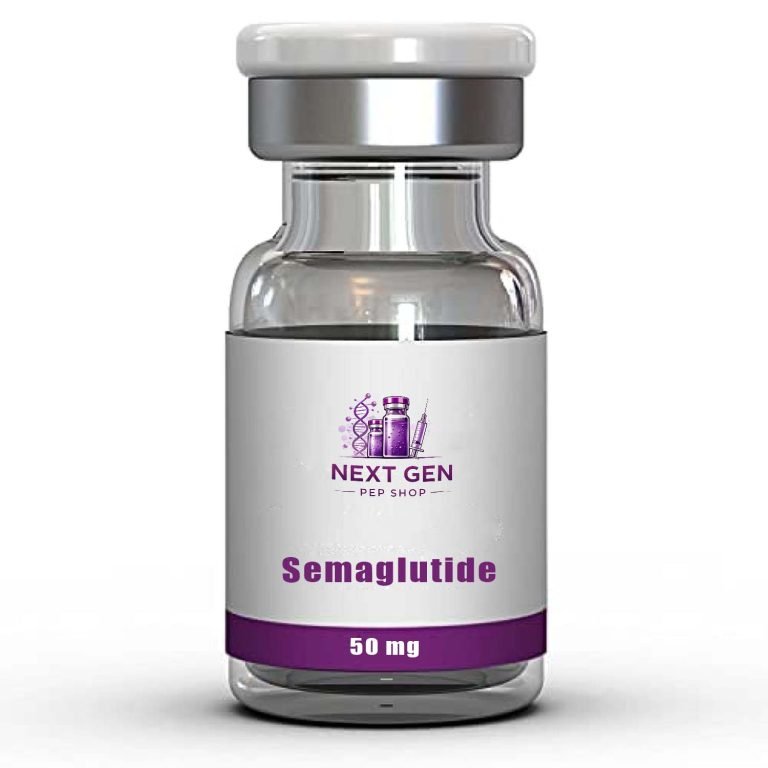
It’s worth spending a moment appreciating what Semaglutide represented when it arrived on the scene, because the context matters for understanding where Tirzepatide and Retatrutide fit.
GLP-1 analogues had existed for years before Semaglutide. The original ones had short half-lives and required daily administration. Semaglutide’s key chemical innovation was the addition of a fatty acid chain that binds to albumin in the bloodstream, dramatically extending its half-life and enabling once-weekly dosing. That alone made it more practical for sustained research protocols — but what really put it on the map was the magnitude of metabolic effects that researchers were documenting.
The mechanism is clean and relatively well-characterized: Semaglutide binds to GLP-1 receptors and mimics the effects of endogenous GLP-1, but with much longer duration and higher potency. In research models, this consistently produces reductions in food intake (via central appetite suppression), delayed gastric emptying, improved insulin secretion in a glucose-dependent manner, and reductions in body weight and adipose tissue.
“What made Semaglutide historically significant wasn’t just the mechanism — it was the scale of the effect. It demonstrated that targeting the GLP-1 pathway alone could produce outcomes that had never been seen with a single compound.”
For researchers, Semaglutide is also useful precisely because it’s so well-studied. There’s a deep literature to work against — a dense base of published research covering its effects on body weight, cardiovascular markers, kidney function, liver fat, neurological pathways, and more. When you’re trying to understand what a newer compound is doing differently, having a well-characterized reference compound matters.
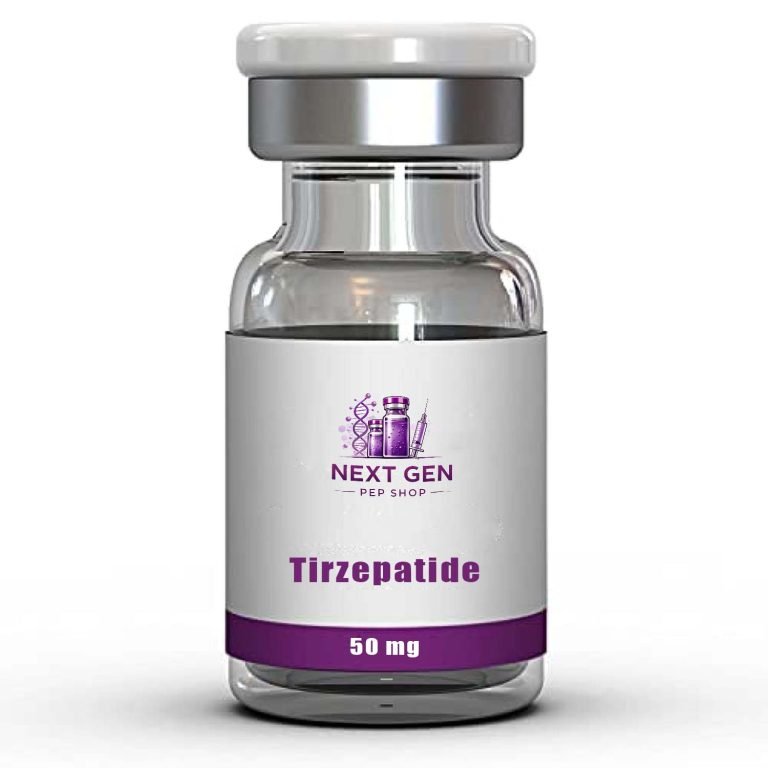
The question that drove the development of dual agonists like Tirzepatide was essentially: if GLP-1 receptor activation produces these effects, what happens if we add GIP to the picture?
The answer — and this surprised some researchers who had written off GIP as less relevant — was that the combination produced meaningfully greater effects on body weight than either pathway alone. The exact mechanism behind this is still being worked out, but several hypotheses are being investigated. One is that GIP receptor activation in adipose tissue may complement the GLP-1 pathway’s central appetite suppression with direct effects on fat storage and energy metabolism in peripheral tissues. Another is that dual activation may avoid some of the receptor desensitization that can occur with single-target agonists over time.
What’s also interesting about Tirzepatide from a research design perspective is that it’s not simply a molecule that hits both receptors with equal force. It’s been characterized as a GIP-biased dual agonist — meaning the GIP component is somewhat more potent at its receptor relative to the GLP-1 component. Understanding that bias matters when comparing it to other dual or triple agonists that may have different receptor selectivity profiles.
When you look at the metabolic research comparing these two compound classes, a few things stand out. Studies have consistently found greater reductions in body weight with the dual agonist approach compared to GLP-1 monotherapy. There are also data points on lean mass preservation, lipid metabolism, and hepatic fat that the dual mechanism appears to influence differently than GLP-1 alone.
But here’s something that often gets missed in casual summaries: Tirzepatide research also opens up a distinct line of investigation around GIP receptor biology that Semaglutide research can’t address. If you’re specifically interested in how GIP contributes to — or modulates — the metabolic effects of GLP-1 pathway activation, Tirzepatide as a research tool is genuinely irreplaceable. The two compounds aren’t just different doses of the same idea.
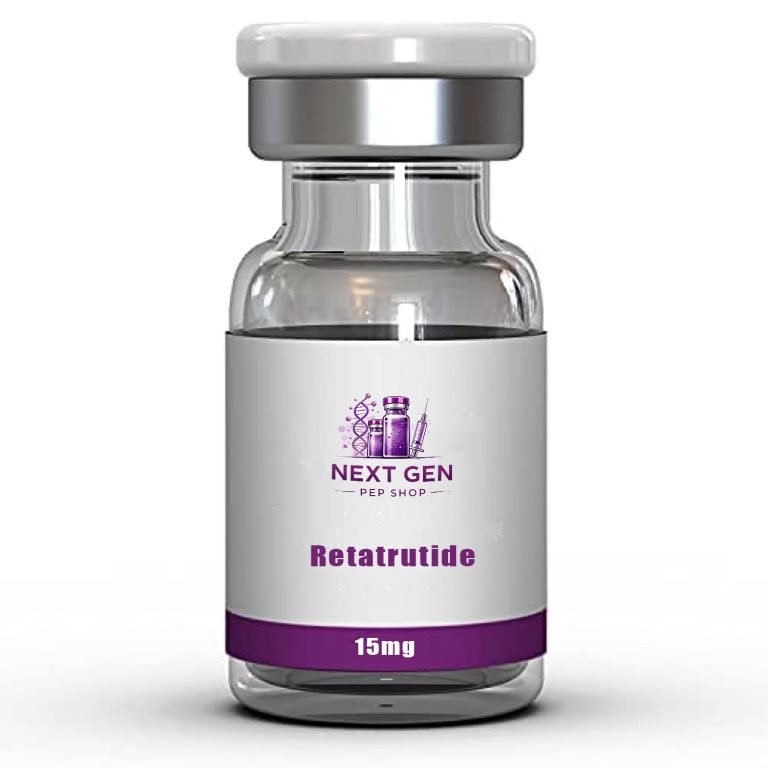
Retatrutide is the newest and most mechanistically complex of the three. It activates GLP-1, GIP, and glucagon receptors simultaneously — a combination that, on the surface, seems like it should be straightforward to describe: more receptors, more effects. But the reality is more nuanced, and it’s worth unpacking why researchers are paying close attention to the glucagon component specifically.
The conventional concern with glucagon receptor activation is obvious: glucagon raises blood glucose. In a protocol focused on metabolic regulation, that would seem counterproductive. But the research on Retatrutide and related triple agonists suggests that when glucagon receptor activation is balanced carefully alongside GLP-1 and GIP co-activation, the glucose-raising effect is largely offset by the insulin-stimulating and glucose-dependent actions of the other two receptors. What remains — and this is the piece that’s attracting the most research attention — is glucagon’s effect on energy expenditure.
Glucagon is thermogenic. It increases the rate at which the liver oxidizes fat, it stimulates brown adipose tissue activation, and it raises basal metabolic rate in ways that GLP-1 and GIP alone do not. The hypothesis driving a lot of Retatrutide research is that this thermogenic component, stacked on top of the appetite suppression and insulin sensitization of the dual GLP-1/GIP mechanisms, produces a metabolic effect that is qualitatively different — not just quantitatively more — than what Semaglutide or Tirzepatide can achieve.
Early research data on Retatrutide has been consistent with this hypothesis. Studies have documented body weight reductions that appear to exceed those seen with either GLP-1 mono or GLP-1/GIP dual agonists at comparable timeframes, with additional signals of interest on lean mass preservation, liver fat, and lipid profiles. Retatrutide research is also starting to branch into areas like bone metabolism, cardiovascular function, and kidney biology — following the same trajectory that Semaglutide research took once the metabolic effects were established.
Here’s how the three compounds line up across the dimensions that matter most for research decisions:
| Compound | Receptors targeted | Primary research focus | Available sizes | Starting price |
|---|---|---|---|---|
| Semaglutide | GLP-1 | Appetite regulation, insulin secretion, glycaemic control, cardiovascular biology, body composition | 5mg – 60mg (7 sizes) | $42 / 5mg |
| Tirzepatide | GLP-1 + GIP | Dual-pathway metabolic research, adipose tissue biology, GIP receptor contributions, body weight | 5mg – 60mg (8 sizes) | $49 / 5mg |
| Retatrutide | GLP-1 + GIP + GCGR | Triple-pathway metabolism, thermogenesis, hepatic fat, energy expenditure, lean mass, advanced obesity research | 5mg – 60mg (9 sizes) | $91 / 5mg |
One thing that’s worth noting in that table: the pricing difference between Semaglutide and Retatrutide at the same dose size isn’t just a premium for novelty. It reflects the genuine complexity and cost of synthesizing a triple-receptor agonist with the right binding profile — Retatrutide’s chemistry is significantly more demanding than a single-target GLP-1 analogue. For researchers running large-scale or multi-arm protocols where cost per milligram matters, that’s a real consideration.
The GLP-1 family has dominated the peptide research conversation for the last few years — understandably, given the scale of what’s being documented. But there are other compound categories that we carry that are doing quietly significant work in research labs, and they deserve more attention than they typically get in general peptide coverage.
BPC-157 (Body Protection Compound 157) has been in the research literature for decades, and it keeps showing up in new contexts. Originally studied in models of gastrointestinal injury — it’s derived from a protein found in gastric juice — it has since accumulated a remarkably broad body of research on soft tissue healing, tendon repair, muscle regeneration, and angiogenesis.
What makes BPC-157 interesting mechanistically is the breadth of pathways it appears to engage. Research has implicated the nitric oxide system, VEGF (vascular endothelial growth factor), and multiple growth factor pathways in its effects. It’s also been studied in neurological contexts — models of traumatic brain injury, Parkinson’s disease, and depressive behaviour — which suggests a broader biological footprint than a simple “tissue repair compound” label captures. We carry BPC-157 at 5mg ($48), and in combination with TB-500 in 10mg ($117) and 20mg ($196) blends for researchers interested in synergistic healing protocols.
NAD+ (Nicotinamide Adenine Dinucleotide) isn’t a peptide in the strict sense, but it’s one of the most important research compounds in the aging and longevity space, and it’s genuinely hard to overstate how central it is to cellular biology. It’s a coenzyme involved in hundreds of metabolic reactions, essential for mitochondrial function, DNA repair via PARP enzymes, and the regulation of SIRT1 and SIRT3 — the sirtuins that have been extensively linked to longevity pathways.
The reason NAD+ is so interesting for aging research is straightforward: its levels decline with age in most tissues, and that decline correlates with a wide range of age-related changes in metabolism, mitochondrial function, DNA repair capacity, and inflammation. Whether restoring NAD+ levels can reverse or slow those changes is one of the more actively researched questions in longevity biology right now. We stock NAD+ in 100mg ($45), 500mg ($90), and 1000mg ($169) — the 1000mg option is particularly useful for longitudinal research protocols.
GHK-Cu (glycyl-L-histidyl-L-lysine copper) might be the most underappreciated compound in our entire catalog relative to how much research supports it. It’s a naturally occurring copper complex that has been studied for decades, particularly in skin biology and wound healing, and the research literature on it is genuinely fascinating.
What sets GHK-Cu apart is its documented effects on gene expression. Unlike most compounds that affect one or two well-defined pathways, GHK-Cu appears to influence the expression of hundreds of genes involved in tissue remodelling, antioxidant defence, anti-inflammatory responses, and cell survival pathways. Some researchers have framed it as a “biological reset” compound — with evidence suggesting it can shift gene expression in aged tissues toward patterns more typical of younger tissue. At $33 for 50mg, it’s also one of the most cost-accessible compounds in the catalog for researchers who want to include it in a broader longevity panel.
MOTS-c is one of the newer research compounds that has genuinely surprised the field. It was only identified relatively recently as a peptide encoded in mitochondrial DNA — an unusual origin that immediately attracted research attention. It activates AMPK, the central energy-sensing enzyme of the cell, and has been studied in the context of insulin resistance, exercise biology, metabolic homeostasis, and healthy aging.
What’s particularly interesting about MOTS-c is the exercise biology angle. Research has found that MOTS-c levels increase during exercise and appear to contribute to some of exercise’s systemic metabolic benefits — which raises interesting questions about its potential as a research tool for understanding the molecular basis of exercise-induced metabolic improvements. We stock MOTS-c in 20mg ($122), 30mg ($180), and 40mg ($225).
Here’s something that doesn’t get discussed enough in peptide research circles, probably because it’s uncomfortable: the quality of your research compound is itself a variable in your experiment. And it’s a variable that, if uncontrolled, can produce results that are misleading, irreproducible, or just wrong.
This isn’t hypothetical. When a research compound has impurities — degradation products, synthesis byproducts, misfolded peptide chains, or contaminants from the manufacturing process — those impurities can have biological activity of their own. A “90% pure” peptide is not just a less concentrated version of the same thing. It’s a mixture, and you’re not fully in control of what’s in that mixture or what it’s doing in your assay. A study built around a poorly characterized compound produces data that can’t be trusted, let alone replicated.
This is the real reason that third-party HPLC testing matters for research procurement — not as a marketing claim, but as a methodological requirement. HPLC (High-Performance Liquid Chromatography) is the gold standard analytical method for peptide characterization. It quantifies the target compound relative to everything else in the sample, and it will catch impurities that simpler testing methods miss. A compound that arrives with an HPLC-verified COA from an independent laboratory is a compound whose identity and purity you can actually verify before it goes into your protocol.
At NextGen Peptides Shop, every batch of every compound we sell is sent to an independent, accredited third-party laboratory for HPLC analysis before it’s listed for sale. The COA for each batch is available directly on the product page — linked to the specific lot number, not a generic document from a previous run. That’s the standard we hold ourselves to, and it’s the standard we’d encourage any researcher to demand from their supplier.
If you walked into this post wondering which of these three metabolic peptides to use in your research, the honest answer is: it depends entirely on your research question, and in many cases the most valuable approach is to have all three available as comparative reference compounds.
Whatever your protocol requires, we carry it — third-party tested, COA-available, and shipped from the USA. Browse the full catalog at nextgenpeptidesshop.com/shop, and if you have questions about compound selection for a specific research application, reach out — we’re happy to help.